News



Radio advertising boosts daily web sessions by an average of 16%, doing so twice as cost-efficiently as other ‘demand-generation’ media combined. This is according to Radiocentre’s newly published research study, ‘Radio: The Performance Multiplier – The Amplified Edit’.
Conducted in partnership with independent research agency Colourtext, the findings of this expanded study are derived from regression analysis exploring the effect of 7.2 billion multimedia impressions on 195 million web sessions. The data is sourced from in-market advertising campaigns for eight brands, representing five different sectors.
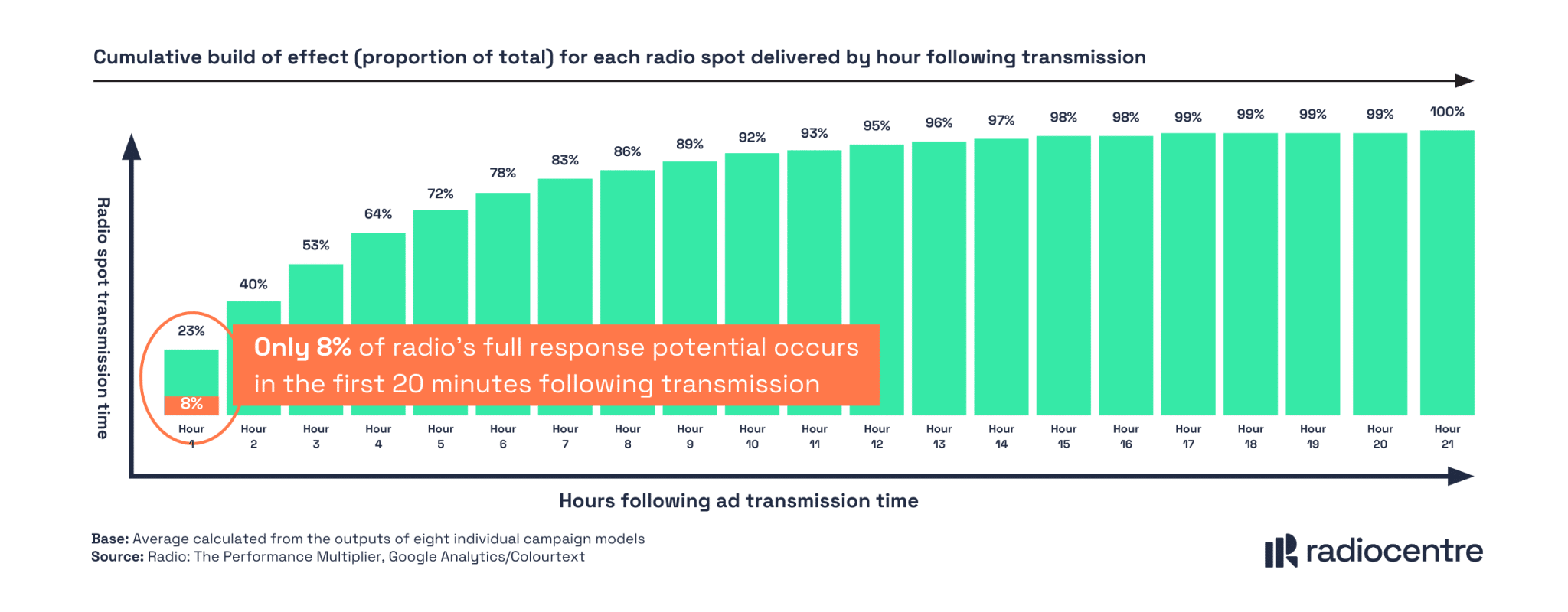
In unearthing these headlines, the study also highlights the major limitations of measuring offline media using current attribution approaches. While most analyses typically capture effects in the 20 minutes immediately following transmission, regression modelling reveals that the full impact of a radio advertising spot is delivered over a 21-hour timespan, suggesting that only 8% of each radio spot’s full effect is delivered within the nominated 20-minute limit. This means that typical time-limited response-window approaches overlook 92% of radio’s full web response potential.
Beyond driving web traffic highly efficiently relative to other media, radio is also demonstrated to enhance the performance of pureplay digital channels. Analysing the increase in web sessions by referral source reveals how radio amplifies the effect of paid search and paid social activity, helping brands derive improved effects from their digital media spend.
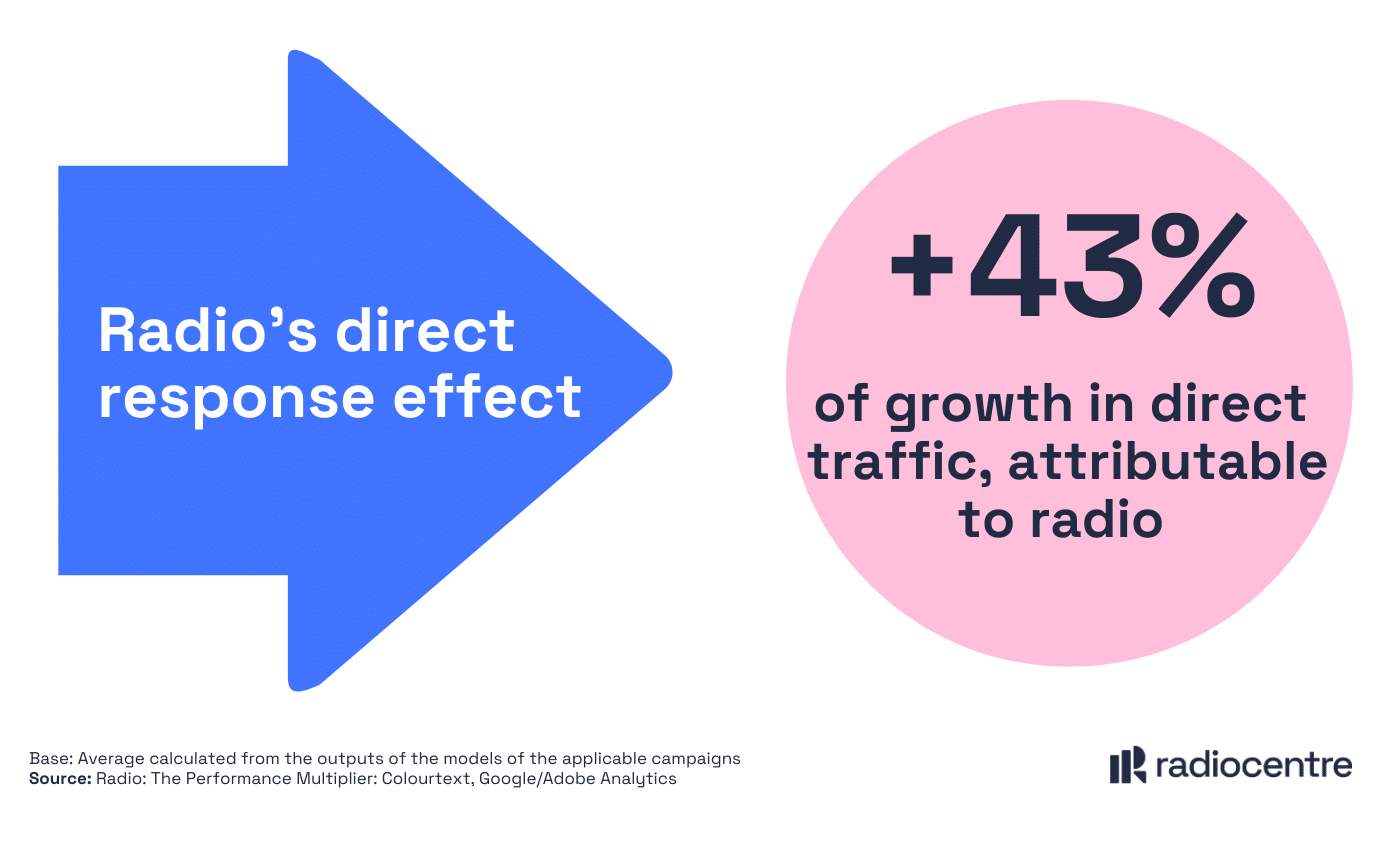
The expanded dataset also provides timely evidence of radio’s ability to help brands overcome AI disruption to search strategies: on average across the campaigns measured, 43% of the increase in direct traffic to brands’ websites was attributed to radio advertising.
This important learning highlights a potential role for radio in helping brands steer more people to their websites more-efficiently, thus reducing reliance on the increasingly AI-disrupted search middleman.
Beyond the short-term boost to performance metrics, the research also confirms radio’s role in delivering longer-term brand effects by building mental availability for advertised brands. This can help generate demand in the longer-term, ensuring a brand more-readily springs to mind when the consumer is prepared to purchase.
Radiocentre’s Planning Director, Mark Barber, said:
“The dual short- and longer-term effects of radio advertising highlighted in this study demonstrate the powerful role the medium can play in helping brands break-through the Performance Plateau and amplify the overall results from their performance media investment.”
The full report is available here.