


HIGH GAIN AUDIO
Using Multiplatform Audio to amplify total media campaign ROI.
Introduction
High Gain Audio is a new ground-breaking deep-dive analysis of audio advertising effectiveness conducted by WPP Media which demonstrates the ROI impact of both Broadcast Radio and Digital Audio (individually and combined) relative to other media. The study also explores how reallocating budget from other media into these channels – which we refer to collectively as Multiplatform Audio – can augment overall media campaign ROI.
A. KEY TAKE-OUTS
Broadcast Radio and Digital Audio services (i.e. podcasts, music streaming services, linear radio listened to via connected devices) play complementary roles for listeners – leading to continued growth in the commercial audio audience. They can also do so for advertisers, thus enhancing the impact of Multiplatform Audio on media campaign outcomes.
- Multiplatform Audio advertising delivers both short-term and full-term ROI significantly higher than the all-channel average:
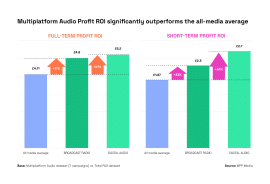
• £2.50 short-term ROI (up to 3 months) +32% vs. all-media average (£1.87)
• £5.00 full-term ROI (from 3 months up to 2 years) +21% vs. all-media average (£4.11) - Underpinning Total Audio ROI, when broken out individually, both Broadcast Radio and Digital Audio each significantly outperform the all-media profit ROI average in both the short-term and full-term. This is the first time this respective data has been made available, which fully supports Digital Audio’s price positioning relative to Broadcast Radio.
- Acknowledging the competition for media budgets from the digital sector, it is telling that ROI generated by both audio platforms is substantially greater than that measured against pureplay digital advertising platforms (at current spend levels). This holds true in terms of both short-term and, especially, full-term ROI.
- Including Multiplatform Audio in the mix amplifies total campaign short-term ROI
Beyond achieving above-average ROI, analysis of the Multiplatform Audio Dataset* reveals that both audio formats possess significant marginal ROI headroom. Taken together, these mean that when budget is reallocated from other media to Multiplatform Audio, overall media campaign ROI can be boosted at no additional media cost.
This holds true for any level of audio budget allocation up to and including 25% share of total media expenditure, at which point overall campaign ROI is 9% higher than the same campaign spend without audio included within the mix.
*See ‘How the study was done’ section for full details
B. PUTTING THE LEARNING INTO PRACTICE
Based on analysis of the Multiplatform Audio Dataset*, the implications of this study are evident; advertisers can benefit from Multiplatform Audio’s ROI advantage and boost their campaign ROI significantly without increasing media spend. We present below, based on our interpretation of the best practice learning suggested by the analysis, Radiocentre’s recommended three-step guide to maximising these effects:
- Reallocate budget from other media to incorporate Multiplatform Audio in the mix, up to 25% of total campaign spend
A significant step in using audio advertising to amplify ROI outcomes at a campaign level is to be more ambitious with the budget allocated to Multiplatform Audio. The analysis demonstrates significant advantages available to advertisers who exploit audio’s marginal ROI headroom and allocate a greater proportion of total media budget to both Broadcast Radio and Digital Audio – with the opportunity to boost total campaign short-term ROI maximised when audio is allocated 25% total media spend.
In the context of relative ROI performance and current spend volumes, at a headline level the data supports considering pureplay digital advertising formats (e.g. paid social, online video, PPC, online display) as potential sources of funding to increase Audio’s share of total media spend. - Use Digital Audio formats to supplement NOT substitute Broadcast Radio
Acknowledging the importance and influence of individual campaign dynamics, the study also indicates how Multiplatform Audio’s impact on headline campaign ROI can be maximised through seeking an appropriate balance in the share of Total Audio budget allocated to each of Broadcast Radio and Digital Audio. Based on the outputs from this analysis, Radiocentre recommends considering an increase in the share of the Total Audio budget allocated to Digital Audio formats to c. 30% (with the remaining 70% to Broadcast Radio) when the headline audio budget hits 10% or more of Total Media spend. - Evolve Media Mix Modelling to dissect both Broadcast Radio & Digital Audio effects
The data contained in this report demonstrates the value of more precise measurement and analysis in unlocking the full potential from audio media spend. In this context, we encourage advertisers to evolve their MMM (Media Mix Modelling) capabilities to identify the individual contributions of Broadcast Radio and Digital Audio within the context of the wider media mix. A good start point from an audio perspective is to use Post-Campaign Reports from J-ET and J-ET Digital to ensure that modelling is built on the most accurate and granular audience delivery data currently available.
C. BACKGROUND AND OBJECTIVES
The RAB’s seminal 2013 study Radio: the ROI Multiplier set a new standard for evaluating ROI generated by audio advertising, with findings derived from a broad dataset of 517 multi-media campaigns, contributed by a range of media agencies and standalone econometrics suppliers. The study demonstrated average radio revenue ROI of £7.70, ranking it second only to TV in terms of payback relative to media cost. Perhaps more importantly, the analysis also revealed how overall media campaign effectiveness could be optimised by increasing radio’s share of total media budget to 20%, at which level campaign ROI grew by over 8%.
There have been many developments in the world of audio since this study was published. The launch of the Amazon Echo in late 2016 (now found in around half of UK homes), combined with a significant increase in smartphone penetration, means that audio content now is truly multiplatform, and more seamlessly accessible in and out of the home, wherever people are and whatever they’re doing. The impact of this increased accessibility can be observed in record commercial audio audiences, buoyed by 23% growth in listening since 2018. While broadcast remains the predominant listening platform, the primary driver of audience growth in recent years has been listening through IP-connected devices – which now accounts for almost half of all time spent listening to commercial audio.

In parallel with the growth in connected listening, broadcasters have evolved their commercial offering through combining the digital targeting efficiency of connected platforms with the cut-through and emotional heft of audio advertising. These developments enable advertisers to boost overall campaign outcomes by using Digital Audio to build on the effective bedrock of Broadcast Radio activity.
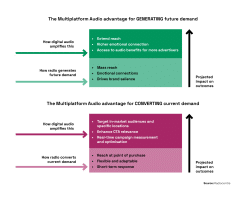
Radiocentre’s Speed of Sound report (published in 2025) explored how this evolving commercial proposition impacts the role and effectiveness of audio advertising. Using broad Demand Generation and Demand Conversation objectives as a framework, we reviewed the available evidence to develop hypotheses about how different commercial audio formats combine to perform these functions for advertisers. The analysis identified the unique communications features of Broadcast Radio and Digital Audio for delivering against both short and long-term goals, indicating how these complementary characteristics, when used in combination, can deliver cumulative benefits and improved outcomes to advertisers (as illustrated below).
In response to these developments, Radiocentre commissioned new research into agency and advertiser customer attitudes towards audio advertising. This revealed how the burgeoning Multiplatform Audio offering was driving demand for new ROI data to substantiate the benefit of using Digital Audio/Broadcast Radio in combination and to justify the relative price positioning of Digital Audio. High Gain Audio was developed to meet this demand.
The objectives for this study
- Develop ROI evidence to support the use of Multiplatform Audio within the media mix for campaigns with either long or short-term goals (generating/converting demand).
- Explore how Multiplatform Audio impacts overall campaign ROI and develop insight into how these effects can be amplified.
D. HOW THE STUDY WAS DONE
To deliver these challenging objectives, the first and most important requirement was to procure access to a robust and credible dataset to analyse. Thankfully, as we embarked on this project, WPP Media, Thinkbox, and Ebiquity had recently published their award-winning Profit Ability 2 study which contained detailed ROI data for a range of media channels, including a substantial number of audio campaigns.
As the originators of the project, we are grateful to Thinkbox for allowing us access to this excellent dataset and introducing us to the brilliant MMM team at WPP who we briefed regarding our desired outputs from new analysis focusing on the audio elements within the data.
D1. The Profit Ability 2 dataset
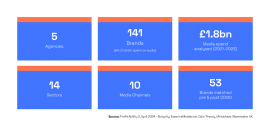
Profit Ability 2 was conducted by Ebiquity, EssenceMediacom, Gain Theory, Mindshare, and Wavemaker UK. It’s a meta-analysis of econometric studies from 141 brands covering £1.8 billion of media spend across 10 media channels and 14 business sectors. Audio advertising featured in 84 of the cases within the dataset.
D2. The five-stage analysis process adopted by WPP Media
- Extract headline Audio ROI data derived from the 84 brands featuring audio contained in the full Profit Ability 2 dataset.
- Create a Multiplatform Audio Dataset
Identify those brands in the wider Profit Ability 2 dataset whose spend levels on each of Broadcast Radio (listened to via analogue or DAB receivers) and Digital Audio (i.e. Linear Radio listened to via IP devices, podcasts, or music streaming services) were sufficient to allow for more granular analysis of the relative performance of audio advertising on these two platforms.
This process revealed seven brands suitable for deeper MMM analysis – forming our one-of-a-kind Multiplatform Audio Dataset. All subsequent stages of analysis were based on this dataset. - Explore the relationship between Broadcast Radio and Digital Audio ROI relative to total Audio ROI across the seven brands, in the Multiplatform Audio Dataset, to create an index of each platform’s ROI performance compared to that of Audio overall. This factor was then applied to the headline Audio data from the full Profit Ability 2 dataset to allow for the ROI attributed to each of Broadcast Radio and Digital Audio to be compared individually against the full set of media channels in the wider dataset.
- Use marginal ROI response curves to calculate the impact on overall campaign ROI derived from increasing Audio’s share of the total media budget.
This analysis explored the effect on total campaign ROI of Audio budget share levels from 0% to 30%, reviewed at 5% increments. In each scenario the total media budget was kept constant, with the budget for all other media channels adjusted (taking relative efficiency into account) to balance out the increase in Audio share. Due to the limitations of the data, this investigation was restricted to analysis of Short-term ROI only across six of the brands in the Multiplatform Audio Dataset. - Investigate the role of different audio budget splits (Broadcast Radio vs. Digital Audio) in maximising Audio’s impact on total campaign ROI
This stage of analysis modelled the effects on total campaign ROI of a range of Audio budget allocation scenarios (based on 10% steps, ranging from 100% Broadcast Radio and 0% Digital Audio – through to 0% Broadcast Radio and 100% Digital Audio) within each increment of Audio’s share of the total media budget, as assessed in the fourth stage of analysis (above).
D3. The Multiplatform Audio Dataset
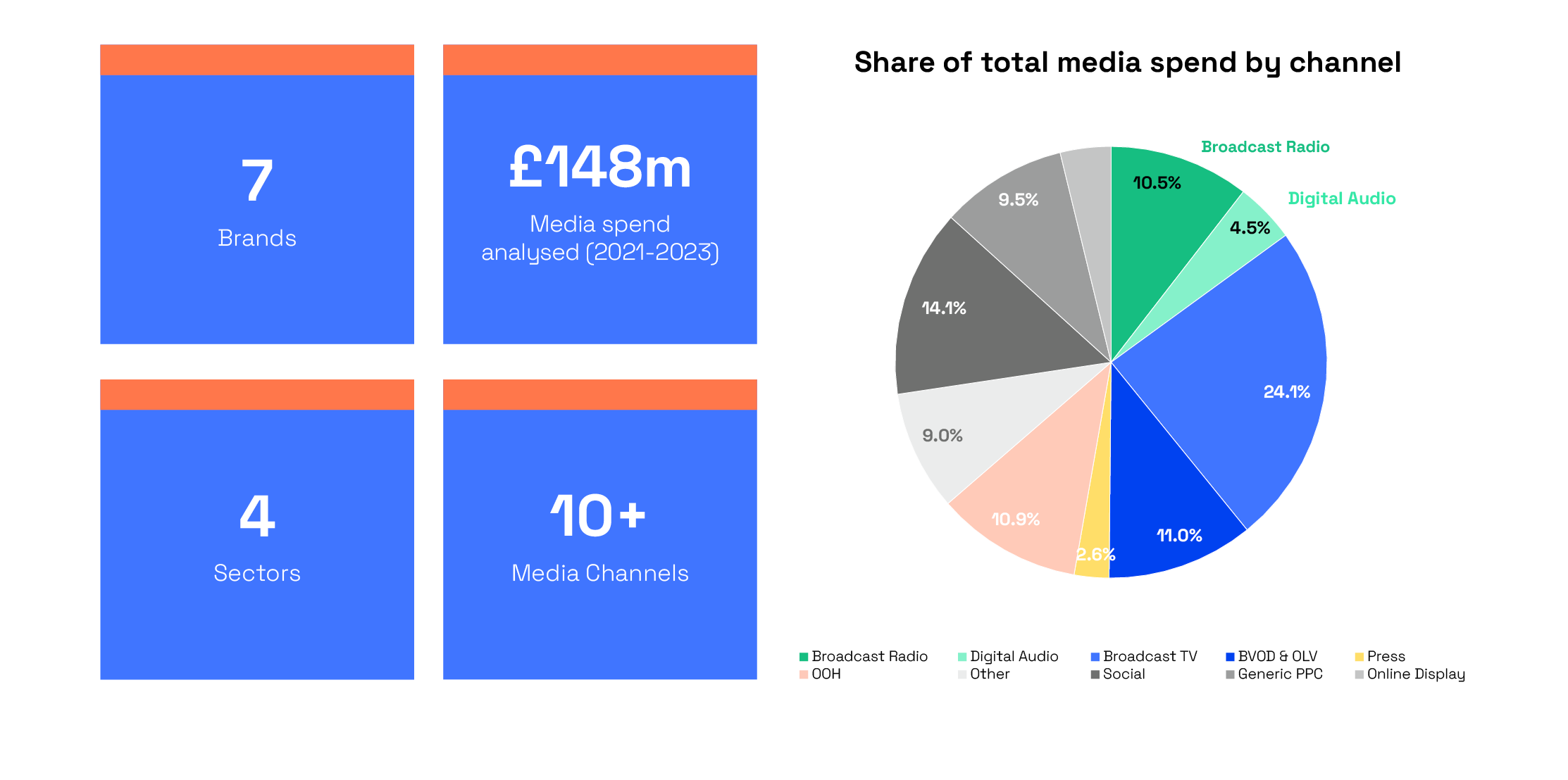
WPP Media unearthed seven brands that had spent sufficiently on both Broadcast Radio and Digital Audio to enable them to parse the ROI effects of each format through further MMM analysis. The seven brands represented four product sectors and spent an aggregated £148m across 10 different media channels over a three-year period.
Audio accounted for 15% of total media spend across this self-selecting sample of brands, split approximately two-thirds Broadcast Radio to one-third Digital Audio. As such, these brands were revealed to invest ahead of the average audio spend across the full Profit Ability 2 dataset. However, this was deemed a natural consequence of the budget commitment required for the individual effects of Broadcast Radio and Digital Audio to be teased apart within their models (characterised by the WPP Media team as a ‘feature’ not a ‘bug’).
E. THE FINDINGS IN DETAIL
E1. Audio full-term profit ROI is 21% higher than the all-media average
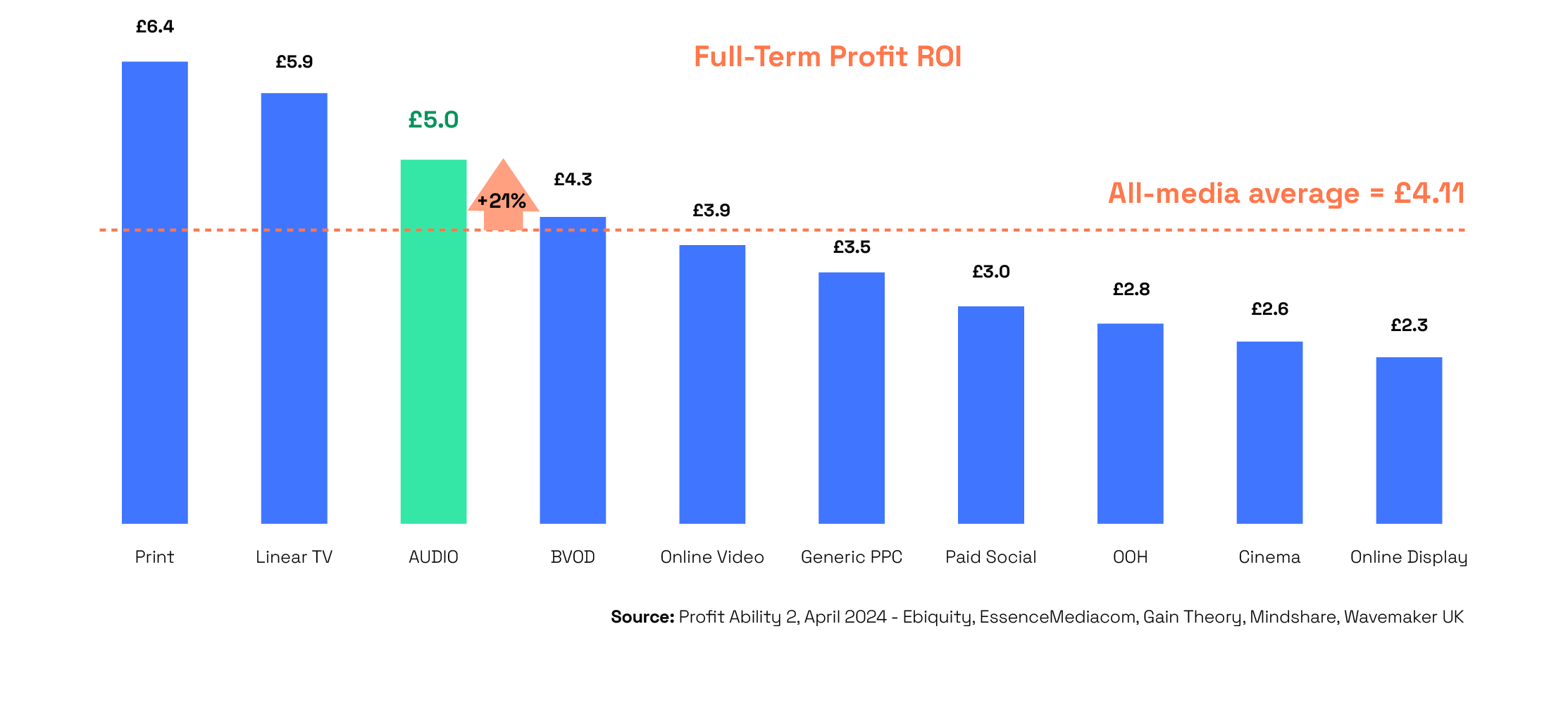
Across the 141 brands representing all categories in the Profit Ability 2 dataset, the full-term ROI (i.e. that generated in the period between 3 months and 2 years following the media campaign) averaged across all media was £4.11. Based on the 84 audio campaigns within this, as revealed in the chart above, audio at a headline level performs strongly – delivering an impressive full-term Profit ROI 21% above the all-media average.
E2. Audio short-term profit ROI is 32% higher than the all-media average
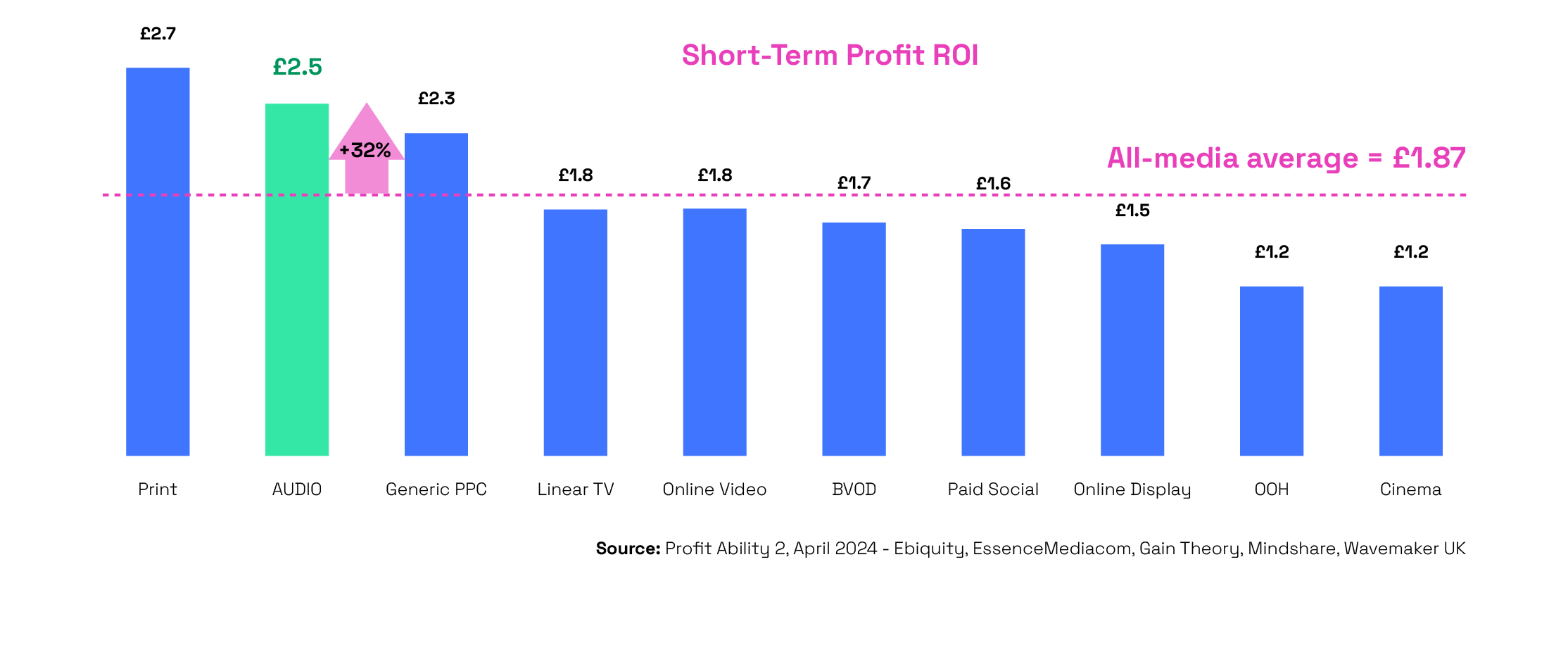
Moving on to consider short-term Profit ROI effects (i.e. those generated in the period up to 3 months following the media campaign), the average ROI across all media was £1.87 (this is understandably lower than full-term ROI due to the much shorter sales period which it encompasses). Perhaps reflecting the medium’s generally accepted strengths for driving short-term effects, the data reveals how audio’s performance relative to other media is even stronger in this regard – exceeding the all-media average by 32%.
Having demonstrated the ROI strengths of audio at a headline level, we now explore if these hold true for both Digital Audio and Broadcast Radio when considered separately.
E3. Broadcast Radio AND Digital Audio full-term profit ROI are above average
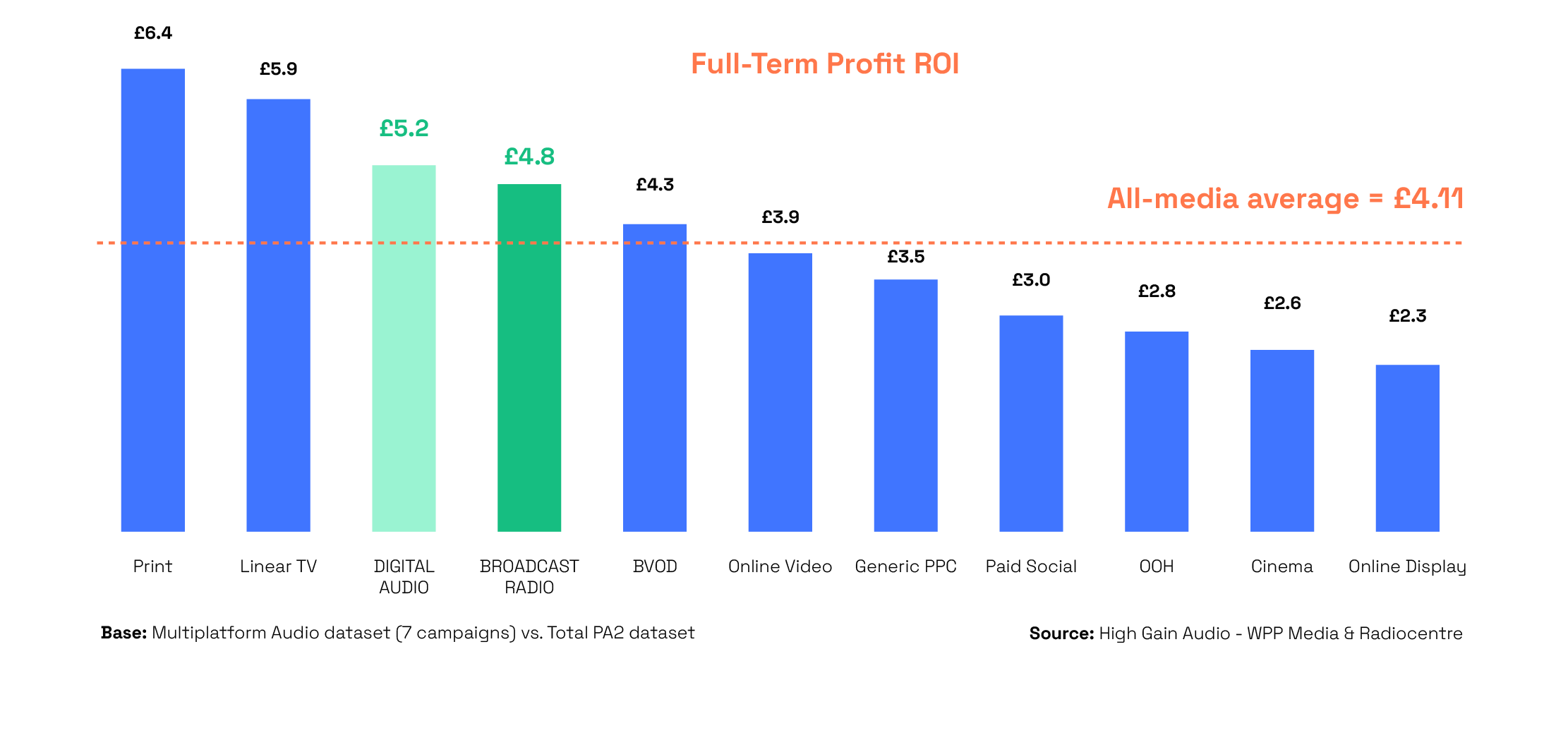
Across the full-term, both digital audio and broadcast radio sit immediately adjacent in the media ROI hierarchy, and they’re both well-above average.
E4. Broadcast Radio AND Digital Audio short-term profit ROI are above average#
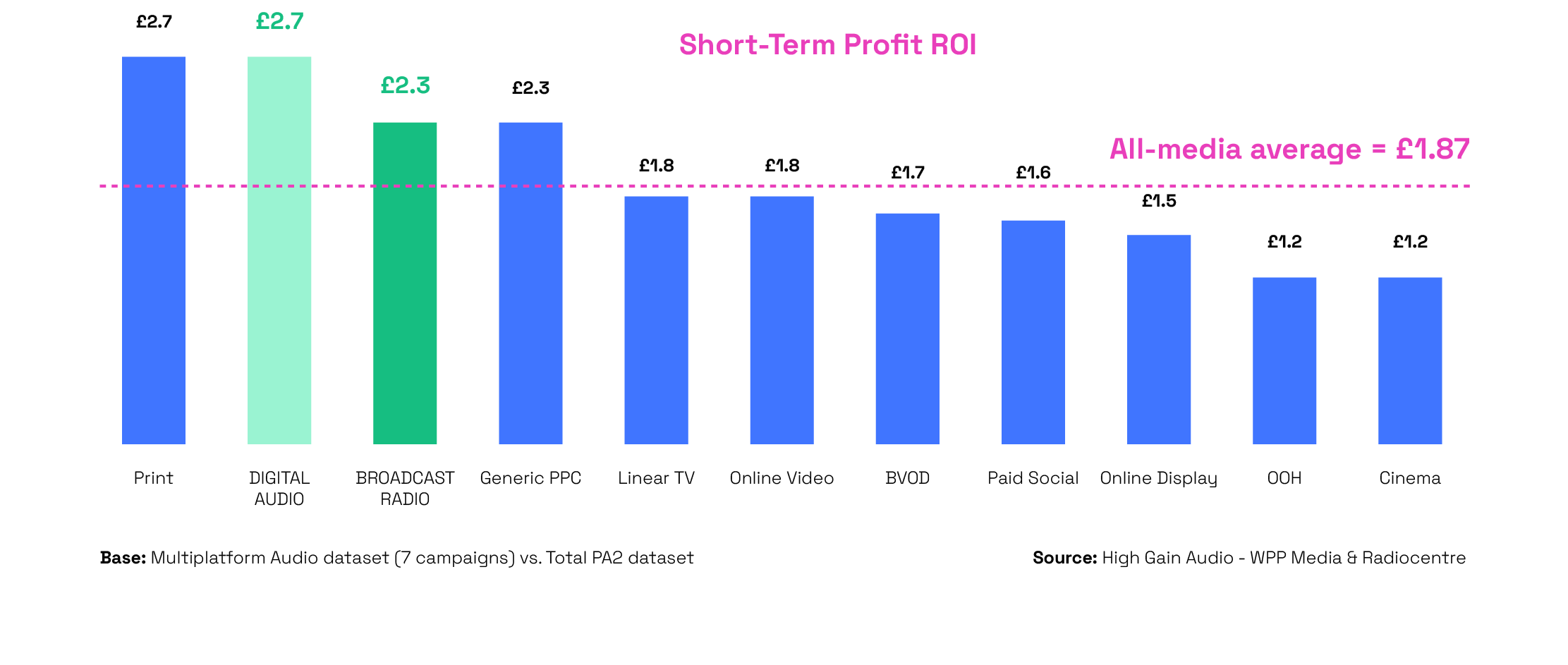
A similar pattern emerges when we review short-term effects. The two audio platforms sit equal first and second in the media ROI hierarchy, both significantly above the all-media average. It’s notable that (across both short-term and full-term) Digital Audio ROI is slightly ahead of Broadcast Radio. While this partly may be attributable to the targeting efficiencies that Digital Audio offers, it could also result from the majority of audio spend across the campaigns within our Multiplatform Audio dataset being allocated to Broadcast Radio – it’s a generally accepted fact that as investment in any media channel increases, the returns eventually start to diminish, creating a knock-on effect on the ROI generated.
An important conclusion that can be drawn from these comparisons is that Digital Audio fully justifies its premium price positioning relative to Broadcast Radio in terms of its comparable ROI performance.
Having produced industry-first ROI data comparisons for Broadcast Radio and Digital Audio, the next stage of analysis set out to explore how the use of Multiplatform Audio in the media mix can help amplify total campaign ROI.
E5. Increasing audio’s share of total media budget amplifies total campaign ROI
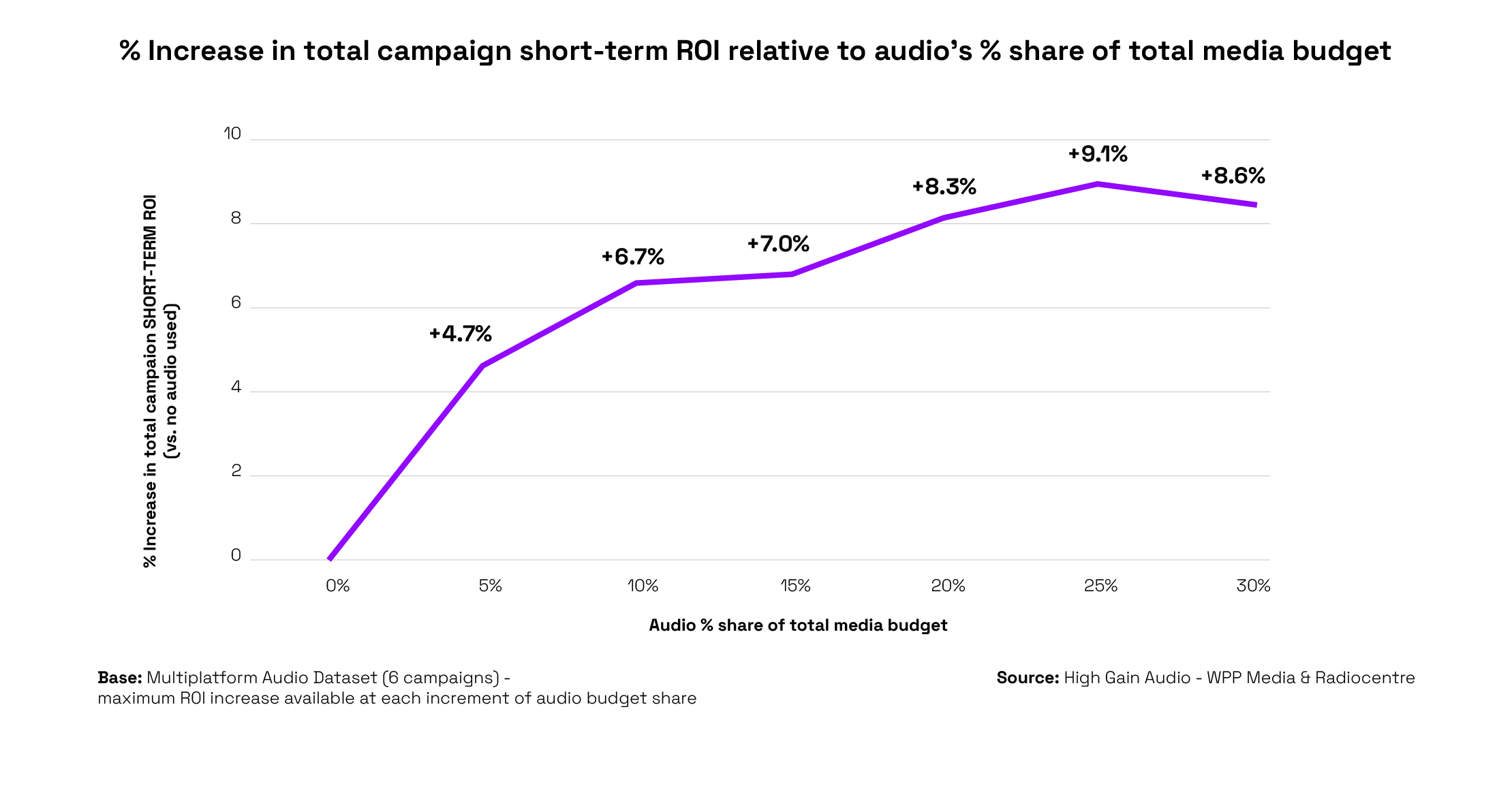
Further analysis of short-term total campaign ROI across six campaigns in the Multiplatform Audio Dataset (which contained sufficiently rich data to accommodate a deeper level of interrogation) reveals significant opportunities for advertisers to exploit audio’s marginal ROI headroom and boost total campaign short-term ROI by allocating a greater proportion of total media budget to both Broadcast Radio and Digital Audio. As the chart above demonstrates, total campaign short-term ROI can be maximised when audio is allocated 25% total media spend.
This audio budget share proposition is further validated through triangulation with other evidence. Firstly, the original ROI Multiplier study finding (detailed above) that overall campaign ROI is optimised when radio holds a 20% share of total media spend. Secondly, from an audience perspective, IPA TouchPoints demonstrates that Multiplatform Audio accounts for a quarter of all time adults spend consuming media content.
Based on the assumption that there is likely to be the greatest flexibility and room to manoeuvre within the budget line that nowadays accounts for the largest proportion of media spend, it makes sense to consider pureplay internet as the potential source of spend to upweight audio to the necessary level. Beyond inferred flexibility, there’s specific ROI evidence to support this shift. When comparing short-term profit ROI, audio formats outperform most pureplay digital channels, with only Generic PPC coming close. Over the full-term, the difference is even starker – with both Broadcast and Digital Audio delivering ROI at least 30% higher than any pureplay digital channel.

E6. Total campaign ROI can be maximised by increasing Digital Audio’s share when overall audio budget is boosted
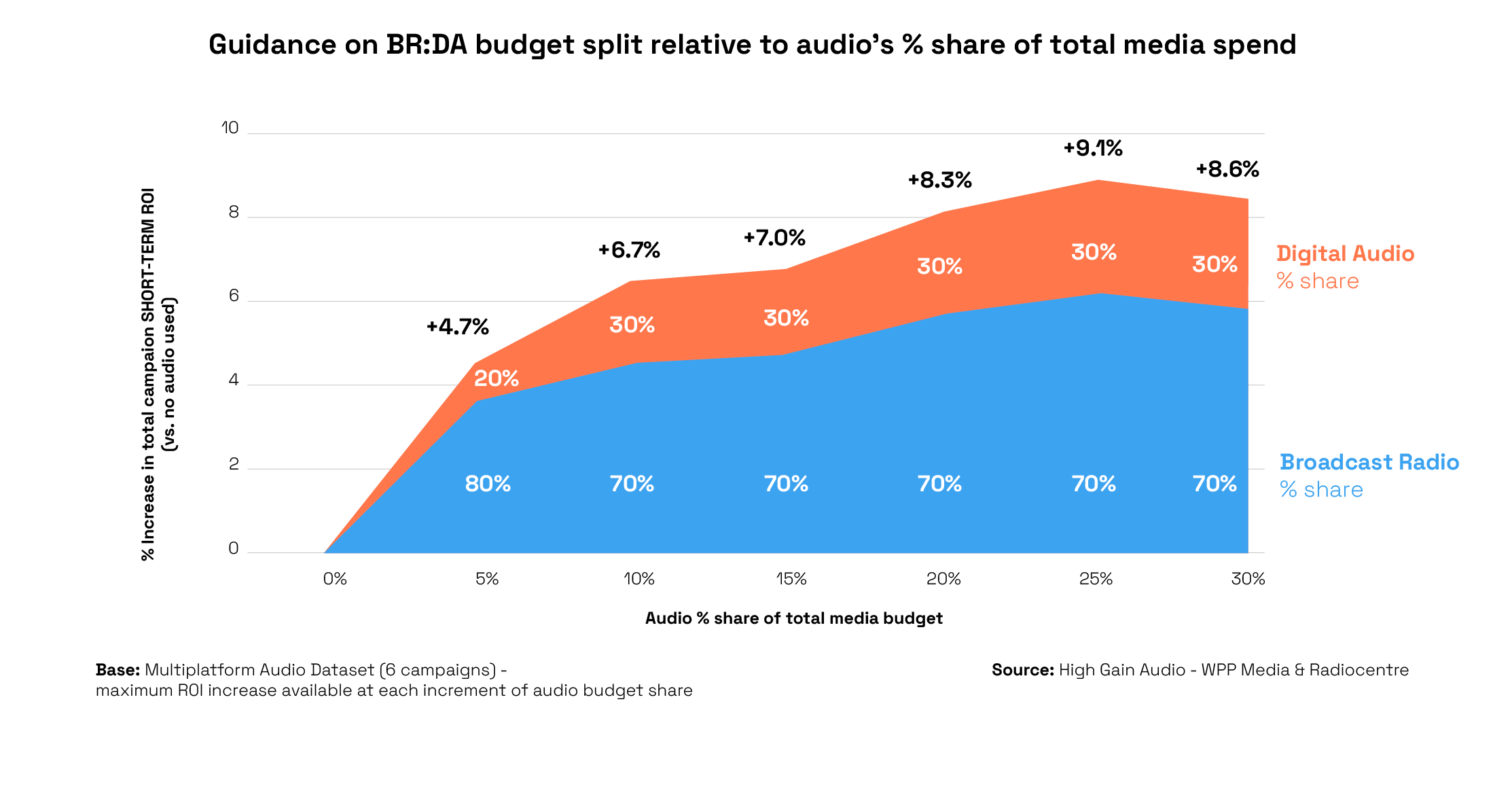
Another advantage of boosting audio budget share is that it creates the headroom to maintain optimal use of Broadcast Radio while augmenting its effects through the addition of Digital Audio. The Multiplatform Audio Dataset supports using Digital Audio as a supplement to – NOT a substitute for – Broadcast Radio, revealing how the two formats combine to maximise total campaign ROI.
Acknowledging the importance and influence of individual campaign dynamics (see below), the analysis explores how Multiplatform Audio’s impact on headline campaign ROI can be maximised by balancing the share of total audio budget allocated to each of Broadcast Radio and Digital Audio. As the chart suggests, audio’s headline effect can be maximised by increasing the share of total audio budget allocated to Digital Audio formats to 30%+ (with the remaining 70% to Broadcast Radio) when audio overall receives 10% or more of total media spend.
It should be noted that this data is offered as broad headline (not categorical) guidance to assist advertisers in making audio budget split decisions when considering how to use Multiplatform Audio to maximise total campaign ROI. It is crucial that this is reviewed and adapted on a case-by-case basis, subject to the following influential factors, to ensure the most appropriate balance between audio formats is attained for each individual campaign.
- Campaign objective (e.g. brand vs. performance)
- a focus on efficient short-term activation may suggest an upweight to Digital Audio.
- see Speed of Sound for further information about the characteristics of Broadcast Radio and Digital Audio relevant to generating and/or converting demand.
- Target audience (e.g. younger vs. older; male vs. female)
- a focus on younger/male audiences may suggest an upweight to Digital Audio.
- See Commercial Audio Audience Analyser to access relevant listening (reach and share) data comparisons across different audio formats.
- a focus on younger/male audiences may suggest an upweight to Digital Audio.
- Relevance of commercial formats to headline media strategy (e.g. context/need-states)
- see Audio Need-states Navigator for related information/data.
Finally in this context, when developing detailed activity plans for Digital Audio’s share of the total audio budget, it is important to acknowledge that, in addition to providing sole access to Broadcast Radio audiences, commercial broadcasters also represent the majority (c. 70%) of connected commercial listening (Source: RAJAR MIDAS).
F. APPENDIX
References
Audio campaign planning resources