News


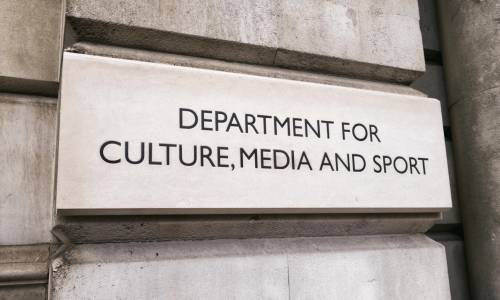
The Department for Culture, Media & Sport (DCMS) has published today (Tuesday 23rd June) a new Green PaperWatch this Space: A new strategic direction for UK media. The document looks at the future of broadcast Digital Terrestrial Television (DTT), as well as consulting on options to require social media companies and video sharing platforms to make sure that news content from public service media, and other trustworthy providers, is prominent and easy to find on their platforms.
On the future of DTT, DCMS is seeking views on two potential timelines for a managed transition to internet-only TV services – 2034 and 2044. Responses to the Green Paper consultation will inform the final decision on the preferred timeline, which the government intends to set out later this year.
Many transmission sites currently used for TV broadcasting are shared with radio. Therefore, any change of this nature will also have a significant knock-on effect on the economics of radio broadcasting and ultimately the choice of services available for audiences.
Radiocentre is currently undertaking an impact assessment on the implications of a DTT switch-off on the radio sector and will provide an industry response to the Green Paper consultation which closes on 31st August. Alongside this work, Radiocentre is working closely with DCMS and the wider radio industry on a Digital Radio & Audio Review which is set to conclude this autumn.
Matt Payton, Radiocentre CEO, said:
“The government is right to focus on future access to high quality UK media content. Broadcast radio continues to be a crucial part of this and plays an important role in reaching the 50 million people that listen each week.
While online listening continues to grow and provide stations with more ways to reach listeners and innovate, broadcast radio is still set to be used and valued by a large proportion of audiences well beyond 2034.
The nature of our shared transmission infrastructure means that if the TV industry were to switch-off DTT in 2034 there would be huge cost implications for radio broadcasters. It is vital that any government decision on the future of DTT properly addresses the impact on radio and its future availability.”